Jacqueline Golding, Ph.D.

Psychologist
License: PSY 16104
Individual psychotherapy for adults, teens, and children
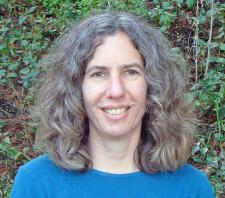
Jacqueline Golding, Ph.D.
1460 Maria Lane, Suite 300
PMB 51028
Walnut Creek, CA 94596
1460 Maria Lane, Suite 300
PMB 51028
Walnut Creek, CA 94596
925-484-2237
I earned my Ph.D. in Psychology at the University of California, Los Angeles, and completed a post-doctoral fellowship at the Central Contra Costa County Child, Adolescent, and Family Mental Health Service in Concord, California. I am also a Registered Play Therapist (T2169). I have been in private practice since 1999.
I hold an appointment as Professor Emeritus at the University of California, San Francisco. I have published over 100 papers in scientific and professional journals on topics such as depression, trauma, and cultural issues in mental health.
I believe that a therapy relationship that is working well supports your healing capabilities, curiosity about yourself, openness to possibilities, and capacity to transform vulnerabilities into areas of strength and growth. My approach to therapy involves using respectful, empathic listening to create a safe place where you can bring difficult and painful feelings and life situations – a place where you don’t have to be alone with them. We work together to understand your emotions and life circumstances. Through this work, you experience yourself differently. In therapy, you can try out new ways of being who you are and saying what’s in your heart, and when you’re ready, you can bring these into the rest of your life. Along the way, I often offer specific strategies that you can use to manage difficult feelings, and if you like, I’ll problem solve with you to implement them. I welcome people of all sexual orientations and gender identities.
In an age-appropriate way, I bring this approach to my work with teens and children. Teens typically prefer talk therapy, although I also offer art and play modalities to people in this age group. Play therapy is the primary modality I use with younger children. Play therapy uses children’s natural capacity to communicate their concerns through play, a language that is rich in metaphor and meaning. This work helps children feel accepted and understood, work through troubling feelings, and make sense of upsetting situations. When working with children (and, to a lesser extent, with teens), I also meet with their parents or other caregivers so that we can work together as a team to promote your child’s healthy development. I am the author of HEALING STORIES: PICTURE BOOKS FOR THE BIG AND SMALL CHANGES IN A CHILD'S LIFE. HEALING STORIES a guide for adults to more than 500 picture books that help support children as they face new or challenging experiences.
Services
Individual psychotherapy
Play therapy
Research consultation
Areas of Expertise
Anxiety
Attention Deficit/Hyperactivity Disorder
Behavior problems (children)
Depression
Eating disorders
Grief and loss
Identity issues
Life transitions
Parenting
Personal growth
Relationship issues
Self-esteem
Self-harm
Trauma
Women's issues
I hold an appointment as Professor Emeritus at the University of California, San Francisco. I have published over 100 papers in scientific and professional journals on topics such as depression, trauma, and cultural issues in mental health.
I believe that a therapy relationship that is working well supports your healing capabilities, curiosity about yourself, openness to possibilities, and capacity to transform vulnerabilities into areas of strength and growth. My approach to therapy involves using respectful, empathic listening to create a safe place where you can bring difficult and painful feelings and life situations – a place where you don’t have to be alone with them. We work together to understand your emotions and life circumstances. Through this work, you experience yourself differently. In therapy, you can try out new ways of being who you are and saying what’s in your heart, and when you’re ready, you can bring these into the rest of your life. Along the way, I often offer specific strategies that you can use to manage difficult feelings, and if you like, I’ll problem solve with you to implement them. I welcome people of all sexual orientations and gender identities.
In an age-appropriate way, I bring this approach to my work with teens and children. Teens typically prefer talk therapy, although I also offer art and play modalities to people in this age group. Play therapy is the primary modality I use with younger children. Play therapy uses children’s natural capacity to communicate their concerns through play, a language that is rich in metaphor and meaning. This work helps children feel accepted and understood, work through troubling feelings, and make sense of upsetting situations. When working with children (and, to a lesser extent, with teens), I also meet with their parents or other caregivers so that we can work together as a team to promote your child’s healthy development. I am the author of HEALING STORIES: PICTURE BOOKS FOR THE BIG AND SMALL CHANGES IN A CHILD'S LIFE. HEALING STORIES a guide for adults to more than 500 picture books that help support children as they face new or challenging experiences.
Services
Individual psychotherapy
Play therapy
Research consultation
Areas of Expertise
Anxiety
Attention Deficit/Hyperactivity Disorder
Behavior problems (children)
Depression
Eating disorders
Grief and loss
Identity issues
Life transitions
Parenting
Personal growth
Relationship issues
Self-esteem
Self-harm
Trauma
Women's issues
Office Information:
Please call 925-484-2237 if you have any questions or to schedule an appointment.